Flood Damage Cleanup in Costa Mesa, CA
Flood damage cleanup in Costa Mesa is a different job from an indoor leak, and the reason is what the water brought with it. Water that has run across ground, through a storm drain or up out of a channel is contaminated by definition, which changes what can be kept and what protective equipment the work needs.
That last point catches people out more than anything else. Water that entered at ground level from outside is treated as contaminated no matter how clean it looked going in, so material that would have been dried after an indoor leak comes out instead.
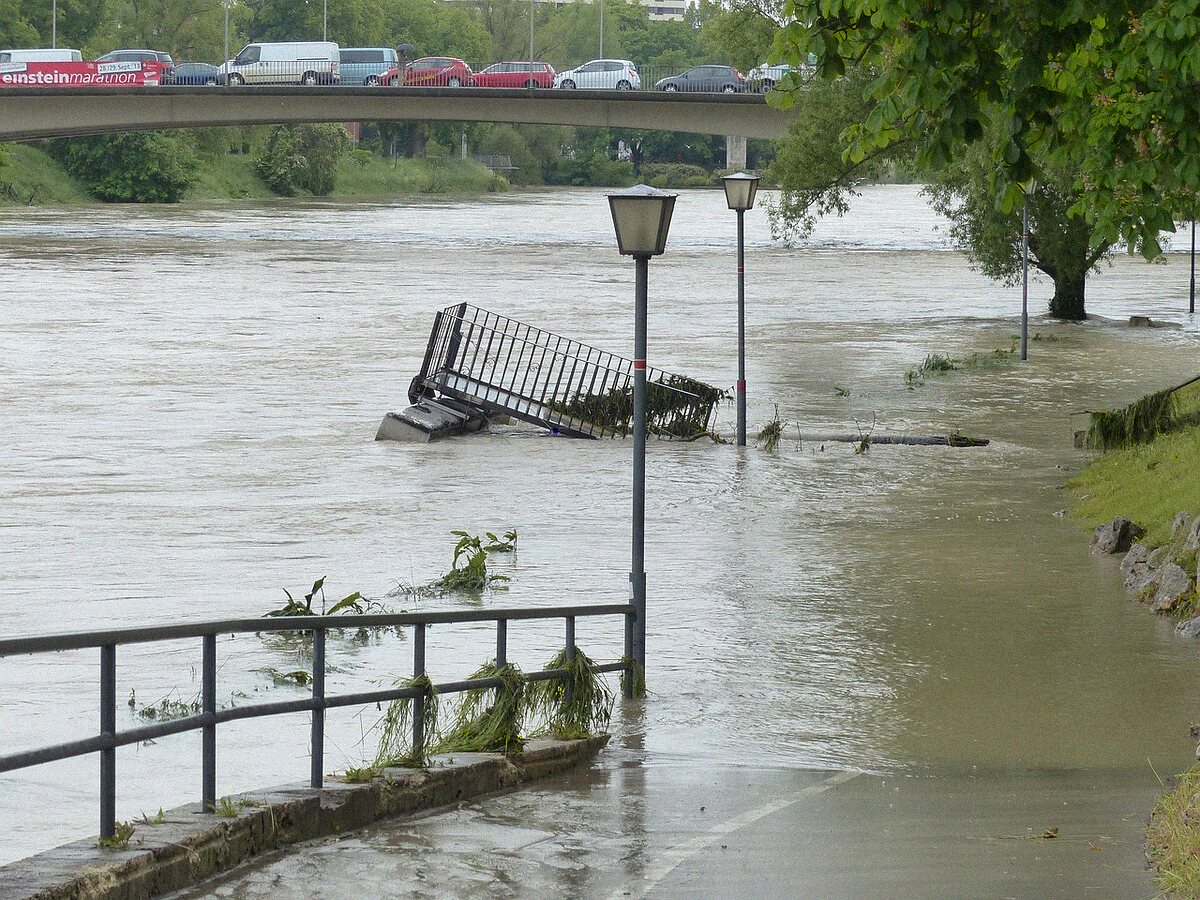
Why Floodwater Is Treated as Category 3
Water that reaches the inside of a building from outside has passed over roads, soil, landscaping and whatever else is in its path, and it commonly mixes with the contents of storm drains and sanitary sewers along the way. The IICRC S500 standard the trade works to classifies it as Category 3, grossly contaminated, and that classification is not a formality. It determines that porous materials are removed rather than dried.
In practice, that means carpet and pad come out. Saturated fibreglass insulation comes out. Drywall that was wetted by floodwater is cut back above the water line rather than dried in place, because the paper facing and the gypsum core both hold contamination that cannot be cleaned out of them. Particleboard and chipboard cabinetry and subfloor that took floodwater generally comes out too. Non-porous surfaces such as tile, sealed concrete, metal and solid timber framing can be cleaned, sanitised and kept.
This is why a flood cleanup looks more destructive than a clean-water job of the same size. Removing material is the treatment rather than a failure to dry it. A flood job where the carpet was simply dried and reinstalled is not a job that was done economically. It is a job that will smell in a month.
The Flood Risk That Applies Around Costa Mesa
The Santa Ana River forms the western boundary of Costa Mesa, and the regional flood history is substantial. Orange County Public Works records that the 1938 Santa Ana River flood inundated parts of Anaheim, Santa Ana and Garden Grove and killed more than 50 people, and that the 1969 storm produced the largest dollar loss in the county's history. The Santa Ana River Project, a Corps of Engineers and Orange County Flood Control District programme of roughly 1.8 billion dollars covering about 75 miles of river, exists to raise flood protection for more than three million people.
The more useful point for a homeowner, though, is the county's own statement about local drainage rather than the river. Orange County Public Works notes that parts of the county outside the river's 100-year inundation area are still exposed to flooding from the overflow of storm water drainage facilities that are presently inadequate to carry a 100-year discharge. That is what floods streets, garages and ground floors in a heavy winter storm, and it applies well away from the river itself.
Costa Mesa is also served by the Santa Ana-Delhi Channel, a named flood-control facility with documented silt and sedimentation problems, and the city is named among those with the greatest flood risk in the western United States in the county's Santa Ana River Project material. Winter atmospheric river storms are the mechanism: concentrated rainfall over a short period, arriving faster than drainage can clear it.
What Flood Cleanup Involves
- Making the property safe, including isolating power to affected circuits before anyone enters standing water
- Pumping and extraction of standing water using self-contained equipment that keeps contaminated waste isolated
- Removal and disposal of porous materials that took floodwater, documented and photographed as they come out
- Removal of silt, mud and debris, which floodwater deposits and which holds moisture and contamination
- Cleaning and sanitising of all salvageable non-porous surfaces, including framing, slab and structural elements
- Antimicrobial application to treated surfaces before drying begins
- Structural drying with equipment sized to the remaining assembly, monitored against a dry standard
- Clearance verification before any rebuilding starts
- Reconstruction of what was removed, once readings confirm the structure is dry
The order matters. Sanitising a surface that still has silt on it achieves very little, and drying a wall cavity that still contains saturated insulation simply takes far longer while never reaching target. Each stage exists because the one after it does not work without it.
What To Do and What To Avoid Before Help Arrives
If floodwater is in the property and it is safe to be there, photograph everything before you move anything, including standing water depth against a wall or a door frame. That depth mark is what the extent of the job is later judged against, and it disappears the moment the water recedes.
Do not walk through standing water where you cannot see the floor or where power has not been isolated. Do not run a household fan across floodwater, because that spreads contamination as aerosol through the rest of the property. Do not start pulling up carpet and stacking it in dry rooms, which moves the contamination rather than removing it. And do not discard damaged contents before they are photographed and listed, because nobody can account for an item that was never recorded.
Tell Us What Has Happened
The line is answered 24 hours a day, every day of the year. If water is still running, shut off the main first, then call.
Why Costa Mesa Property Owners Choose Us
Porous Material That Took Floodwater Comes Out
Porous material that took water from outside comes out rather than being dried and reinstalled. That follows the IICRC S500 classification of floodwater as grossly contaminated, and it is the difference between a property that is clean and one that smells in a month. Where a material is non-porous and can genuinely be cleaned and sanitised, it stays, and the scope says which is which before anything is cut.
Where the Water Came From Is Established First
Runoff that entered at ground level, a drain that surcharged back into the property, and a supply failure inside the building all look similar once the floor is wet, and they are three different jobs. Establishing which one it was decides whether the water is treated as contaminated, what has to be removed rather than dried, and what the repair needs to address. That determination is made at the assessment and written down, rather than assumed from where the water ended up.
Everything Removed Is Documented First
Materials and contents are photographed and listed as they come out, with standing water depth recorded against a fixed reference before it recedes. A flood job turns on evidence of a condition that no longer exists by the time anyone assesses it, and the depth mark on a door frame is frequently the most useful single piece of it. Documentation is done as part of the work rather than reconstructed afterwards from memory.
A common call after a winter atmospheric river storm
The situation: a single-storey house on lower ground, several inches of runoff across the garage and into the adjoining family room after a storm drain backed up overnight. Silt across the floor, carpet saturated, and the bottom of the drywall wet all the way around the room.
What gets done: power isolated, standing water pumped and extracted with self-contained equipment, then documentation of the water line against the door frame before anything was moved. Carpet and pad removed and disposed of, a flood cut in the drywall above the water line, saturated insulation taken out, and silt cleared from the slab before any cleaning. Framing and slab cleaned, sanitised and treated, then drying set with readings logged until framing and slab met a dry standard.
The result: the contamination leaves the property with the material rather than being sealed inside a rebuilt wall, there is photographic evidence of a water depth that no longer exists, and the rebuild starts on a structure that has been verified dry rather than one that looks dry.
Before you sign anything, know the warning signs
A short guide to the things that separate a straight operator from a bad one in this trade, plus how to check a California contractor licence in about two minutes.
Frequently Asked Questions
Why are you removing drywall that looks fine?
Floodwater is classified as grossly contaminated, and gypsum drywall with a paper facing holds that contamination in a way that cannot be cleaned out from the surface. Drywall that took floodwater is cut back above the water line for that reason rather than because it is structurally failed. Where a wall was above the water line and only got damp from humidity, it is usually dried and kept.
Can I clean it up myself and save money?
Some of it, carefully, and photographing everything first genuinely helps whoever handles it next. The parts to leave alone are standing water with power still on, anything involving sewage, and running fans across contaminated water, which turns a contained problem into an airborne one. Removing contents to a dry area and documenting them is useful work that does not require equipment.
How long before we can move back in?
That depends on how much material had to come out and how long the structure takes to reach a dry standard, so it is not something to put a date on before the assessment. What can be said is that the sequence is fixed: removal and sanitising, then drying to a verified reading, then rebuilding. Skipping ahead to the rebuild is what produces the jobs that get done twice.
We had mud and silt as well as water. Does that change things?
Yes, and it adds a stage. Silt holds both moisture and contamination, so it is cleared from surfaces before any cleaning or sanitising, otherwise those steps are working through a layer of deposit. It also tends to get into places water alone would not stay, so the inspection covers more than the visible floor area.
Related Services
Water Damage Restoration
Full water damage response for Costa Mesa homes, from the first extraction pass through to drying, clearance and repair.
Read more →Storm Damage Restoration
Wind-driven rain, roof intrusion and atmospheric river flooding, including board-up and tarp-over.
Read more →Sewage Backup Cleanup
Category 3 contaminated water handled with containment, protective equipment and full removal of porous materials.
Read more →Emergency Water Extraction
Standing water pulled out fast, before it moves into subfloors, wall cavities and the units next door.
Read more →See all 14 water damage services, or start from the Costa Mesa water damage overview. Background on how the business works is on the about page.